Thinking / SANE
Hey AI, what's the real cost if I don't think twice?
On a YouTube channel, an AI borrowed the German voice of Bruce Willis for two videos. A Berlin court sent the bill: EUR 4,000. What that means for everyone who prompts.
We follow that voice from the recording booth to Brussels, past everyone who handles it on the way, and end with the eight steps a marketing team should take before an AI-made ad goes live.
Two videos on a YouTube channel spoke in a voice German audiences know as Bruce Willis's. It belongs to Manfred Lehmann, the actor who speaks Willis's lines in German. Lehmann had never recorded a word of either clip. An AI model had.
Viewers got no hint of that. The videos promoted the channel and a linked online shop, while the man whose voice did the selling had never agreed to it.
That was one voice. Models like the one that made it learn from human work in bulk. On Cloudflare's internet infrastructure network, 80% of AI crawling in the 12 months to August 2025 fetched pages for training.[2]
On this page
- Berlin put a price on the voice
- Between the booth and Brussels, a voice changes hands nine times
- A logo made by prompting may belong to no one
- Eight steps to an ad you can defend
- Safe, questionable, forbidden
- A creator's no counts only when a machine can read it
- Brussels asks the question Berlin answered for one voice
- Sources
Berlin put a price on the voice
EUR2,000a video
EUR 4,000 for the two videos
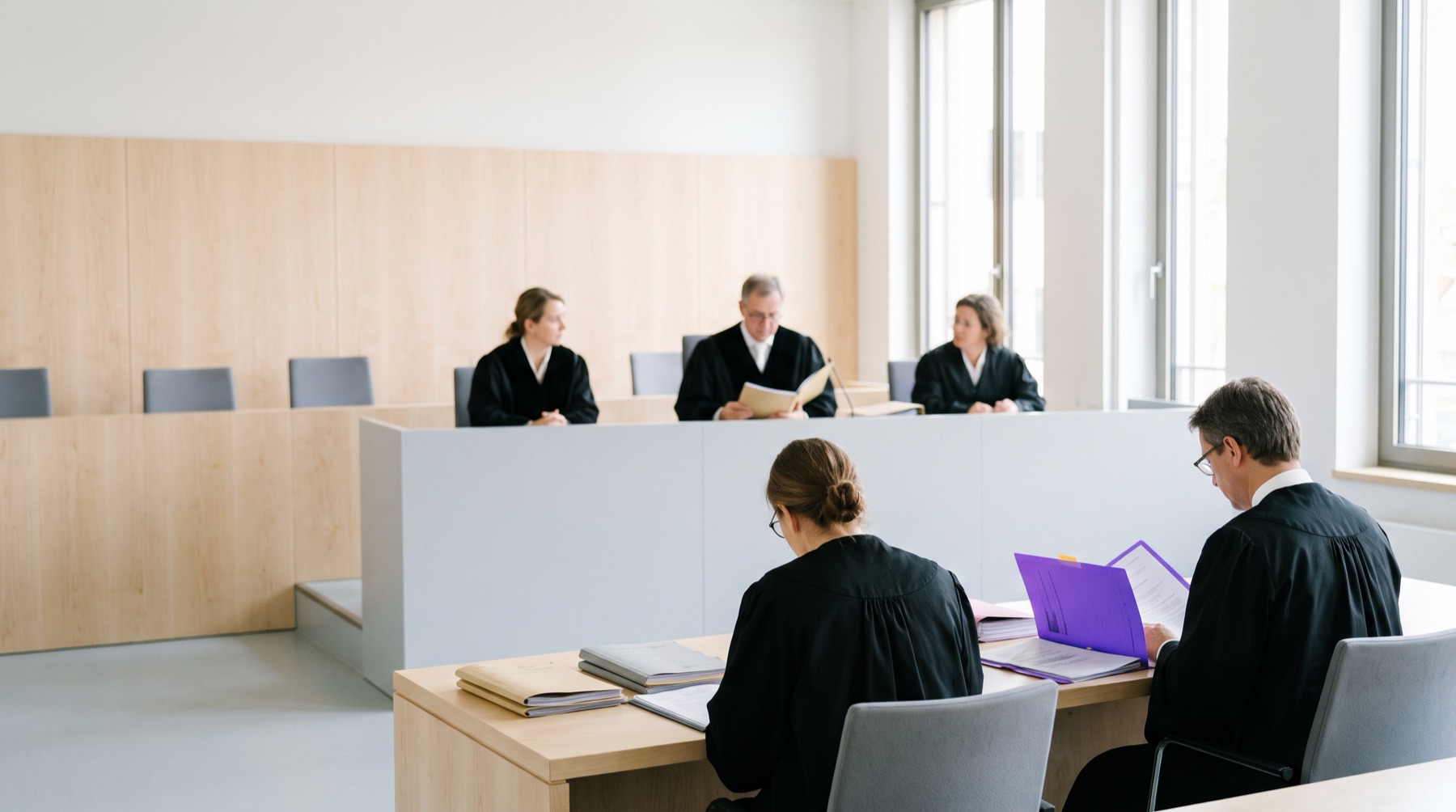
On 20 August 2025 the Berlin Regional Court ruled that the two clips broke German law on personality rights, the rules that shield a person's voice and face. Legal Tribune Online, a German legal news site, reported that the court saw the cloned voice pulling viewers toward the videos and the shop, making the use commercial.[1]
The court treated that as an enrichment at Lehmann's expense and asked a simple question: what would a real license have cost? It settled on a fictitious fee of EUR 2,000 per video, EUR 4,000 in all, and brushed aside the defense that the clips were satire.[1] The report does not say whether the ruling is final.
Copyright offered Lehmann no shelter. It covers works, and in law a human voice is no work, so the court protected the person instead. Want the voice, ask the man.
In that Berlin courtroom, only the YouTuber who posted the copy had to answer. Yet other hands touch a clip like this. Behind the copy sit a tool maker and a model provider; ahead of it sit a platform and its viewers. Further back are the publishers and collecting societies that license the work models learn from, plus the lawmakers writing rules for every step.
Each of them now faces some version of Berlin's question. Europe's courts and lawmakers are deciding what AI owes the people whose work it learns from, and what the people who prompt it answer for, from marketing teams to developers. In Brussels, the European Commission has started asking for every performer what Berlin settled for one.
Between the booth and Brussels, a voice changes hands nine times
Follow a voice like Lehmann's from the moment it is recorded. At each stop someone handles the work, and the law asks something back.
-
Recording booth
Creators
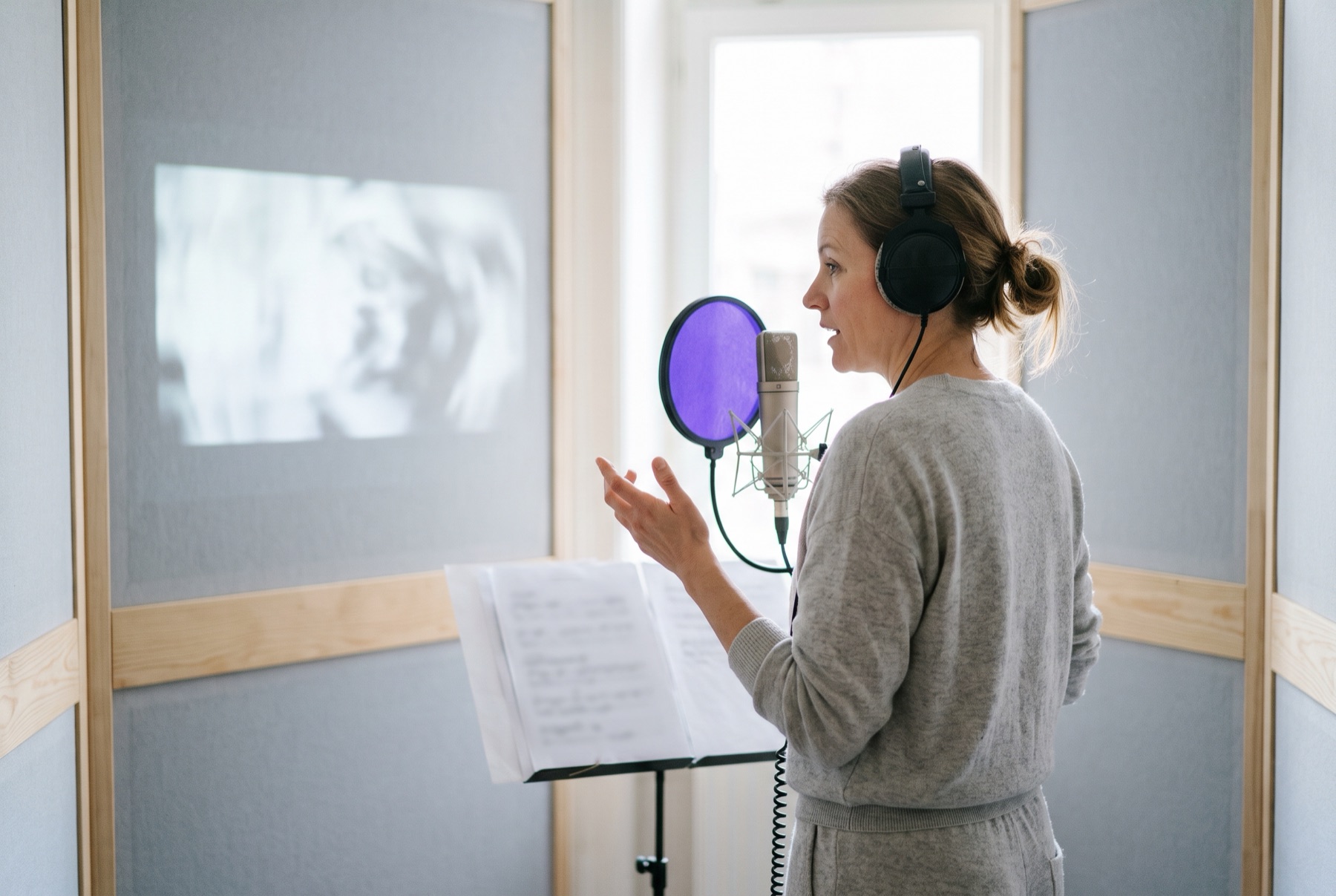
An actor steps into a padded booth and reads the line until it lands. The take gets saved, while the voice on it stays tied to the person who spoke it. A writer at her desk or a photographer out in the field starts much the same way, facing one early choice: whether machines may learn from the work.
-
Rights archive
Rights holders and license givers
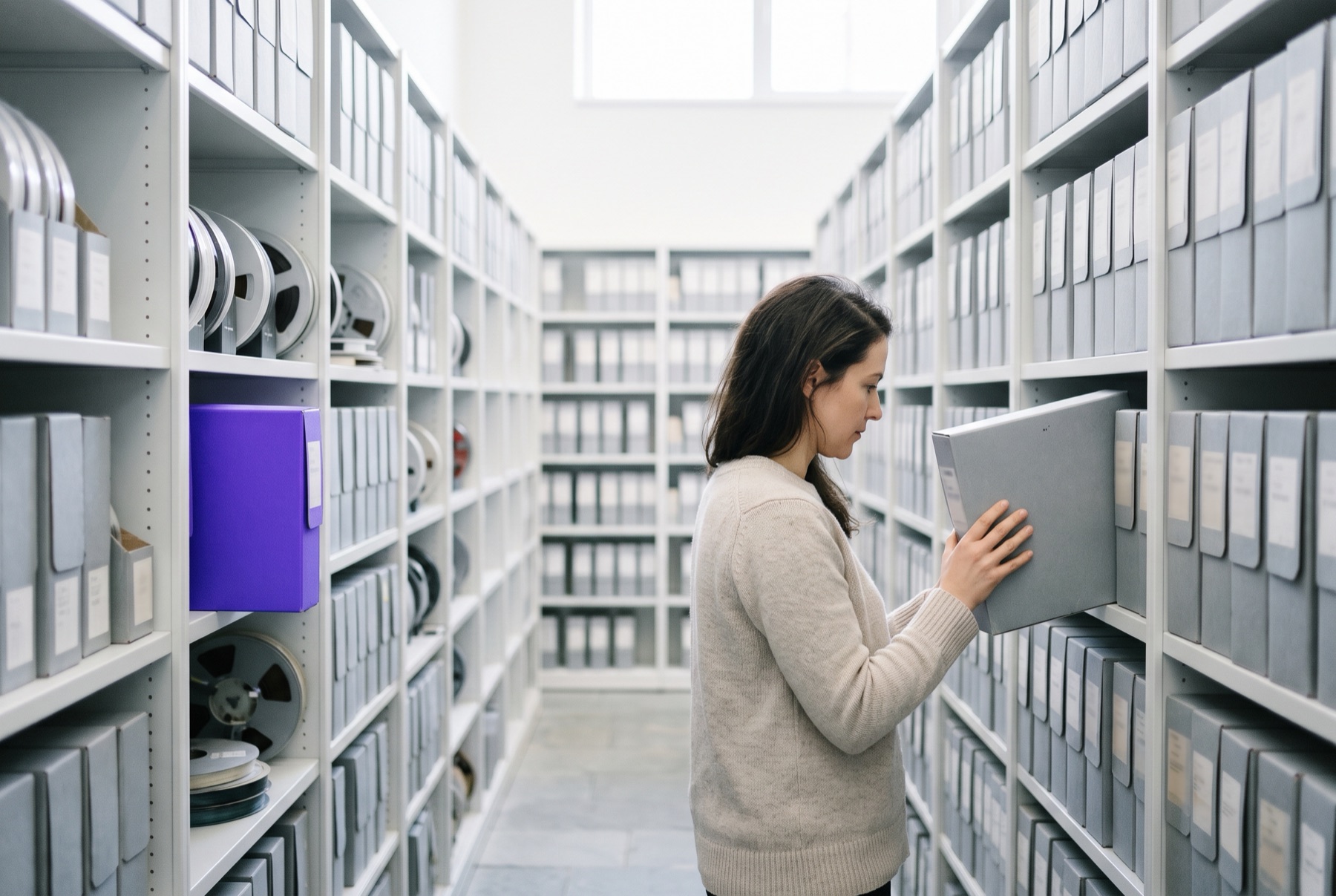
Recordings end up in catalogs, where rights sit in bulk. An archivist files the take beside many others. The publishers and collecting societies holding those rights now set the terms on which machines may learn from them, and Germany's music collecting society GEMA hauled OpenAI and Suno into a Munich court.[13][14]
Disney's three-year license to OpenAI covering more than 200 characters, agreed in December 2025, leaves out the voices and likenesses of its talent.[52] -
Server hall

Model providers
Inside a server hall, an engineer walks past racks that never fall silent. Crawlers haul web pages in, and training folds them into a model. Whatever a model keeps, it can give back. Europe's AI Act requires makers of large models to maintain a copyright policy and publish a summary of their training content, and since August 2026 the Commission has been able to fine them.[10][11][12]
-
Tool screen
Tool makers
A product designer wraps the model in something anyone can operate: a text box and a button. Sometimes the output still carries traces of what went in. In London, the High Court ruled that a few images from Stability AI's model displayed Getty Images' watermarks and infringed Getty's trademarks.[24]
Since 2 August 2026, providers of generative AI systems have had to mark outputs in a machine-readable, detectable format, while systems already on the market before that date have until 2 December 2026.[15] -
Prompt desk
Prompters
Late at night, someone pastes a script into that box, asks for a voice they know, and hears it read right back. So far, courts have spared the simple prompt and pinned liability on the publisher. Once the clip leaves this desk, whoever posts it answers for it. Worse, what comes back may not even be theirs to own.
-
Video feed
Platforms
The video goes live. In a platform office, a tester watches the same clip play across a rack of test phones, feed after feed. Every platform writes its own labeling rules and hides the switch somewhere different. Meta says it will detect ads made with other companies' AI tools, though it has given no date.[21]
TikTok requires advertisers to turn on its AI-generated content setting for fully generated or significantly modified media, and rejects or restricts undisclosed AI content it spots.[20] -
Morning tram
End users
On the morning tram, a commuter stops scrolling and turns up the sound. She hears a voice she recognizes, with no way to tell that a machine spoke it. The law says she deserves a label. If she re-posts that clip for her own business, she becomes, in our view, its publisher, carrying a publisher's duties along with it.
The Commission's guidance calls for the deep-fake label at first exposure at the latest.[17] -
Courtroom
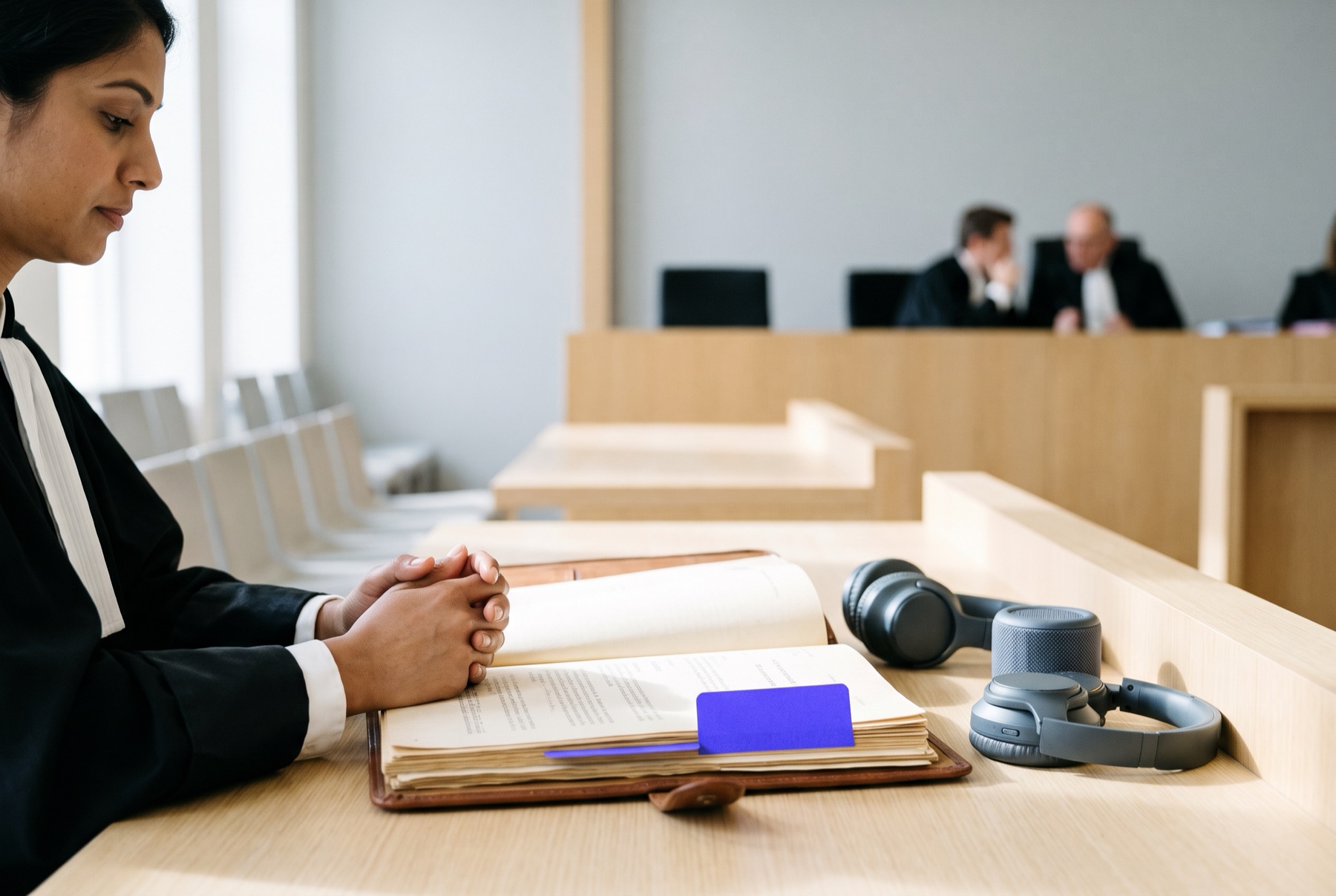
Courts
Any clip that reaches a viewer can land in court. Berlin handed its bill to the YouTuber who published the voice. In May 2026, an appeal court in Hamm took the same line with a company whose website chatbot gave its managing directors medical specialist titles they did not hold. Put a machine's words out in public, both rulings suggest, and you answer for them.
On 12 May 2026 the Higher Regional Court in Hamm held the company liable because a chatbot is no "third party", in a judgment that is not yet final.[25] -
Parliament chamber
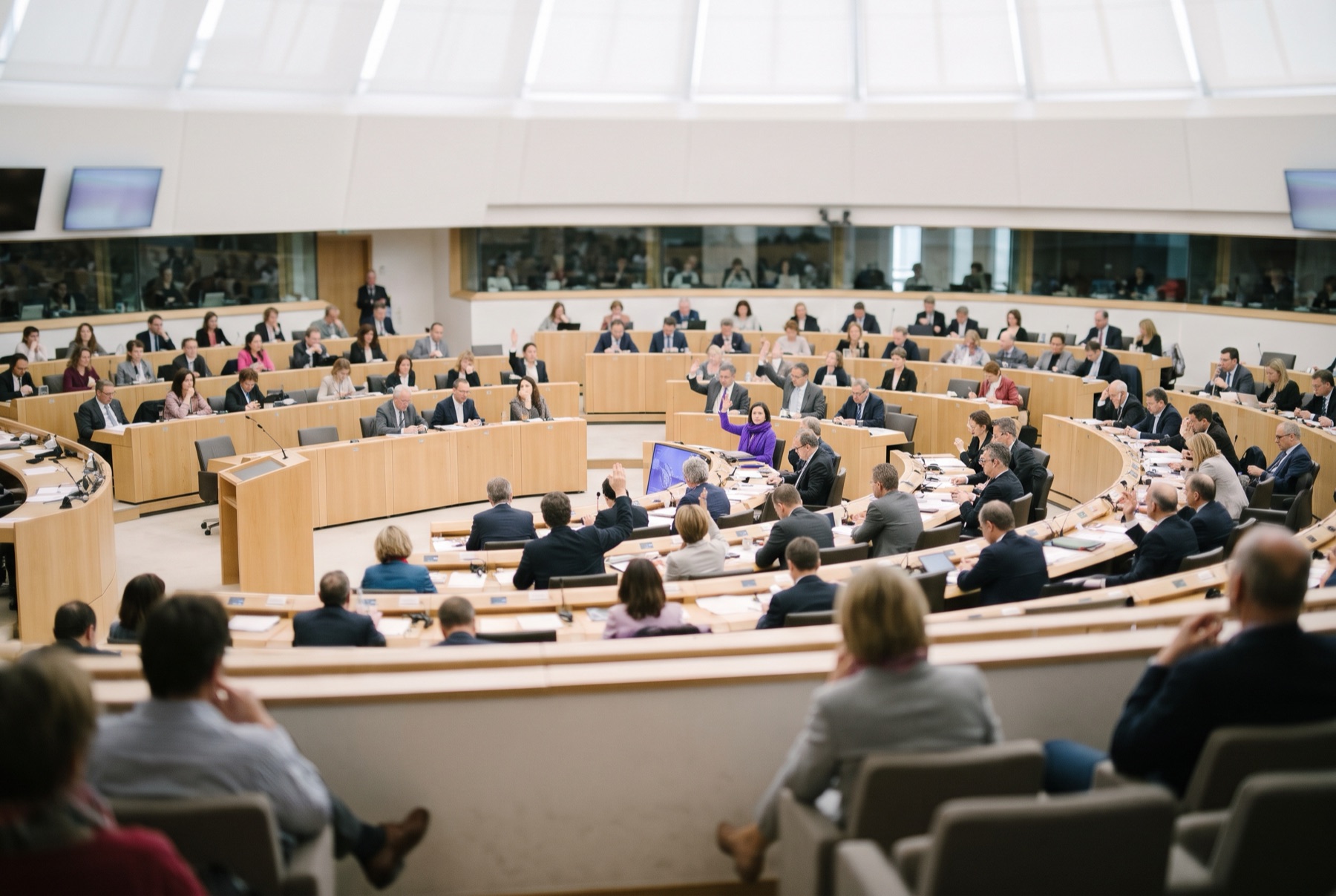
Policymakers
Inside the European Parliament chamber, the question grows from one voice to every work a model has learned from. Members voted for fair pay whenever generative AI uses protected works, past use included. Their resolution binds no one, leaving the next move to the Commission.
Credit and pay
Credit and pay are supposed to travel back down this line to the booth. In Berlin, they arrived as a court-ordered fee. Everywhere else, the line back is still being drawn.
A logo made by prompting may belong to no one
Three logos wound up in a Munich courtroom. Their maker had produced them the way anyone with an image AI does: type a description until one suggestion looks right, then tidy it up. When someone else copied the logos, the maker sued.
Prompt
three logo ideas for a bakery called Korn, minimal, round
Copyright: Human stroke, dated
Prompted logos
Copies by a rival
No work, so no copyright
Munich Local Court, 13 February 2026
A prompt goes in, then another, on a premium subscription.
Three logos come out, each picked from several suggestions.
Someone copies them. The Munich Local Court finds no work.
What a person shapes, and can prove, can be protected.
On 13 February 2026 the Munich Local Court, the lowest rung of Germany's civil courts, threw the case out. Under German copyright law, the logos were no works at all.[18]
The prompts stayed general and left the design choices to the machine, no matter how many rounds it took. Picking one suggestion among several did not count. Paying for a premium subscription did not count either, and the later edits were mostly technical. For protection to apply, the court wrote, human influence has to shape the output "in a sufficiently objective and clearly identifiable way", in our translation of its headnote, and the claimant has to prove it.[18]
For marketing teams, that logic lands uncomfortably close to home. A key visual or logo pulled from a model without provable human shaping has no copyright owner, leaving a rival free to copy it without a copyright claim. No court has applied that rule to an ad yet, though Munich points straight there. Anything the team adds stays its own, from an art director's sketch to an edit that changes what an image says.
A ruling from the lowest civil court carries little weight as precedent. Even so, it is the only German decision on the point we found, and authorities elsewhere have landed in the same spot. On 29 January 2025 the US Copyright Office wrote that prompts alone never make someone an author, while perceptible human expression in the output, or a creative arrangement or modification of it, can still be protected.[29]
Lawmakers are moving in step. In March 2026 the European Parliament said fully AI-generated content should receive no copyright protection, and on 18 March 2026 the British government proposed scrapping the protection British law still gives wholly computer-generated works, though without a bill or timetable yet.[23][30]
That leaves teams with an unglamorous fix: paperwork. Layered files and a dated record of who decided what supply the proof the Munich claimant lacked, and registering a logo as a trademark guards the brand where copyright gives out. Developers who build software by describing it, a habit now called vibe coding, run into the same wall; by that logic, code generated with little human input carries little copyright of its own.
Eight steps to an ad you can defend
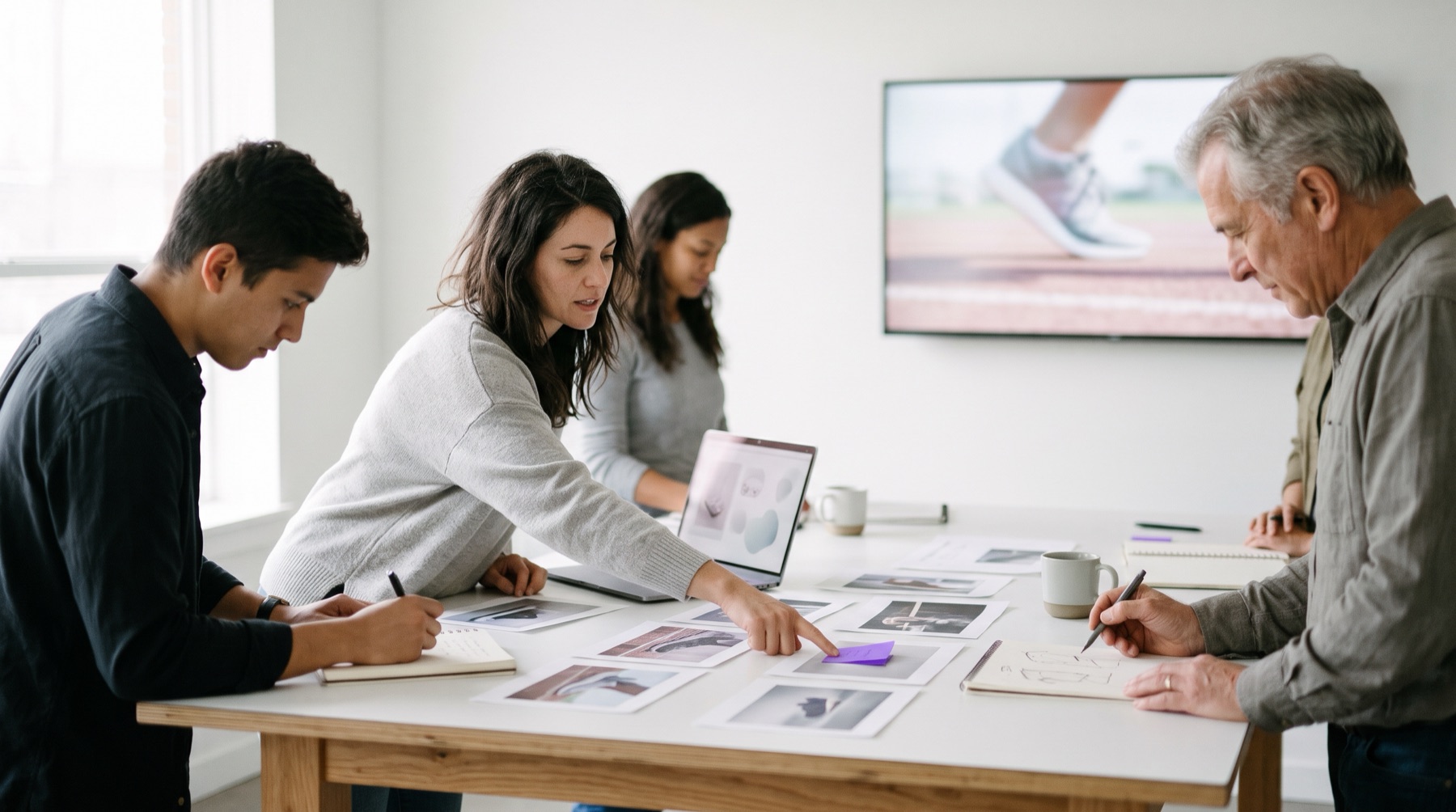
The Berlin YouTuber made one choice the court refused to let stand. A marketing team faces dozens like it every week. Picture a team with until Friday to ship a launch visual and a 15-second spot for a new running shoe. Monday's brief arrives with a product photo and one line from the product team: the shoe is eco-friendly. Eight careful steps get the campaign ready for the first question any rights holder or regulator will ask: where did this come from?
01/08Brief without names02/08Feed it only what you own03/08Read the cover04/08Screen what comes back05/08People and voices06/08Make it yours07/08Label what looks real08/08Sign off, then publish
 Product photo
BriefDue Fri
Launch visual and 15-second spot for a new running shoe
Look
in the style ofa living illustrator
grainy film, early light
Uploads3 files1 file
- Your product photo
Not uploaded
- Stock image, no AI terms
- Competitor's visual
Vendor termsIndemnity
Vendor cover
Excluded
- Edited output
- Inputs without rights
- Trademark use
Is your plan named?
Generated4 variants
Watermark
Clean
Stray logo
Voice track15 s
Sound-alike voice
Licensed voice, consent on file
Layerslaunch_v3
- Layout and type by your art director©
- Product photoyours
- AI backgroundno mark
Record
- brief
- layout v3
- edit
Publish settingsStory ad
AI-generated content
Adds a label to the ad
Format9:16, 15 s
Ad copyFinal check
Eco-friendly upper.
Vague claim
Upper made with recycled yarn.checked
Mara Lind, editorFri 11:20
Record closed4 entries, Fri 11:24
01 / 08
Brief without names
Monday's brief reads "in the style of" followed by a living illustrator's name. The copywriter cuts the name and writes down the mood instead: grainy film in early light. Copyright leaves style open to everyone, while the name invites risk. The law firm CMS treats an output suggesting the artist made it as a possible breach of the artist's personality right.[46]
02 / 08
Feed it only what you own
Next, the designer gathers references. The team's product photo goes in, and stock joins only where its license covers this use. A competitor's visual stays out. Getty's license treats uploading an image to an outside AI tool that acquires rights in it as training, needing written consent and an extra fee. A Frankfurt court held, as reported, that AI editing of a photo needs consent as an adaptation whenever protected features stay recognizable.[9][35]
03 / 08
Read the cover
Before anyone hits generate, someone reads the vendor's indemnity, its promise to defend customers against intellectual-property claims over output. Google, Anthropic and OpenAI all exclude edited outputs, unlicensed inputs and trademark claims from commercial use, and OpenAI names no consumer plan.[16][36][37] The team confirms its plan qualifies and flags which exclusions its workflow trips. Indemnity shifts the cost of a claim, leaving the output exactly as lawful as before.
04 / 08
Screen what comes back
Four variants arrive, and the art director inspects every one. One shows the ghost of a stock watermark, another a stray logo on a passing jacket, so both hit the bin: London's High Court ruled that watermarked outputs infringed Getty's trademarks. The voiceover script gets the same check. Its sharpest lines run through a search engine, because production models sometimes hand back long stretches of memorized text.[24][49]
05 / 08
People and voices
The spot needs a runner and a voice. Someone pitches a sound-alike of a famous voice; the producer points to Berlin and hires a speaker instead, with written consent for this use on file. Any real face requires its owner's consent before going public. A lifelike synthetic runner still counts as a deep fake, even though that person does not exist.[1][31][17]
06 / 08
Make it yours
Now the ad needs a human author a court will recognize. The art director sets the layout and type by hand, logging who decided what in the dated layered file. Following Munich's logic, the AI background belongs to no one, while the layout, type and product photo stay the team's. Off goes the logo for trademark registration, guarding the brand where copyright stops.[18][29]
07 / 08
Label what looks real
The synthetic runner clip gets an "AI-generated" label right where viewers first see it. The launch visual, a real shoe on an AI background, skips the label as long as the shoe looks as it really does. On TikTok, the team turns on the AI-generated content setting. Google's ad label stays optional and, in Google's own words, "doesn't guarantee compliance with specific regulations".[17][32][20][19]
08 / 08
Sign off, then publish
On Friday a named editor checks every line and claim, cutting "eco-friendly" unless someone can back it. That review does legal duty too: Gleiss Lutz, a German law firm, sees AI-drafted sustainability claims as candidates for the AI Act's text label, lifted only after human editorial review. No AI "customer" praises the shoe either, since EU and German consumer law blacklists fake reviews and endorsements.[32][17][41][42] The folder closes, and the ad goes live.
Safe, questionable, forbidden
Between them, the courts and rulebooks answer 21 questions marketing teams ask before opening an AI tool. These verdicts reflect our own reading of the sources, and any campaign skating close to a line needs its own legal check.
Safe 7
Can we draft ad copy with AI?Safe
Can we prompt for a genre or a mood?Safe
Can we put a real product photo on an AI-generated background?Safe
Can we retouch photos with AI?Safe
Can we edit licensed Getty images with AI?Safe
Yes, for licensed creative images, staying inside the edits your license permits. [9]
Can we publish a realistic synthetic scene?Safe
Yes, if you place a clear AI label at first exposure and imitate no real person. Under the AI Act, a disclosed deep fake is allowed. [17]
Can we keep AI crawlers off our own website?Safe
Yes, by writing your opt-out into robots.txt. Under German law, an online reservation counts only when a machine can read it. [5]
Questionable 7
Can we treat a prompted logo or key visual as our exclusive asset?Questionable
Not through copyright. A Munich court denied copyright to three prompted logos, leaving rivals free of copyright claims if they copy one, so register a trademark to guard the brand instead. [18]
Does the vendor's indemnity cover us?Questionable
Can we prompt "in the style of" a named living artist?Questionable
Better not. Style itself sits outside copyright, yet the law firm CMS treats an output suggesting the artist made it as a possible breach of the artist's personality right. [46]
Can we edit someone else's photo with AI?Questionable
Only with a license. A Frankfurt court held, as reported, that AI editing counts as an adaptation needing consent whenever the photo's protected features stay recognizable. [35]
Can a chatbot answer customers without review?Questionable
Only at your own risk. Hamm's appeal court held a company liable for false titles its website chatbot gave out, ruling that a chatbot is no third party. [25]
Can AI draft health, safety or sustainability claims?Questionable
Can we scrape competitor or publisher sites to train our own model?Questionable
Forbidden 7
Can we clone a real person's voice for an ad?Forbidden
Not without consent. Berlin's court ruled that an unlabeled AI copy of a voice actor's voice promoting a channel and a shop infringed his personality right. [1]
Can we show a recognizable AI likeness of a real person?Forbidden
Not without consent. German law requires consent before displaying a person's picture in public, and we read a recognizable AI likeness the same way. [31]
Can we publish a synthetic person or an invented customer without a label?Forbidden
Can we publish AI-generated reviews or testimonials?Forbidden
Can we publish an output that shows another company's watermark or logo?Forbidden
Can we upload licensed Getty images to an AI tool that trains on them?Forbidden
Not without Getty's written consent and an extra fee. Its license treats that upload as training. [9]
A creator's no counts only when a machine can read it
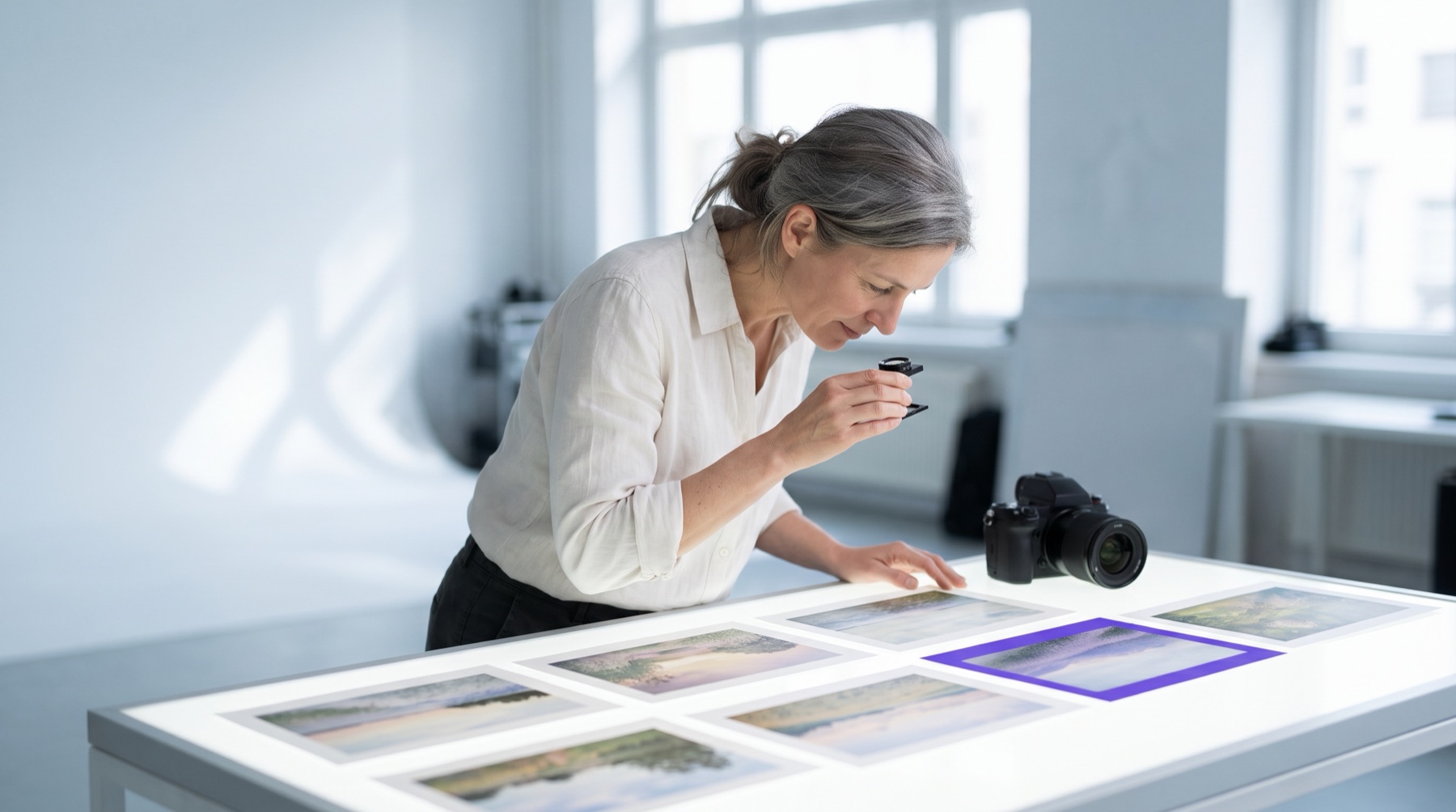
Flip the route around and start again in a studio. A photographer finishes a series and posts it on her own website, right in the path of crawlers the instant it goes live. The actor in the booth had his personality right to lean on. She holds copyright in her pictures, and her first defense against a crawler is a plain-text file. Three steps decide whether any of that work comes back to her as credit or pay.
01/03Say no where a machine reads it02/03Keep the proof03/03License, or join those who do
- 1User-agent: GPTBot
- 2Disallow: /
- 3
- 4User-agent: Google-Extended
- 5Disallow: /
- 6
- 7User-agent: CCBot
- 8Disallow: /
Federal Court of Justicepronounces 17 Dec 2026
Proof recordSaved 23 Nov, 09:12
Prompt
Continue the first chapter, word for word.
Answer
Near-verbatim passage
76.8% of the first Harry Potter book returned near-verbatim (study, January 2026)
Licenses3 examples
- GEMA PLAIabout 178,000 sound filespay promised
- STIMattribution through Sureel
- HarperCollinsUSD 5,000 a titlehalf to the author
01 / 03
Say no where a machine reads it
German law lets anyone copy lawfully accessible works for text and data mining, letting machines analyze them, unless the owner opts out; online, only a machine-readable reservation counts. In December 2025 a Hamburg appeal court found a photo agency's plain-language notice insufficient, and Germany's highest civil court rules on 17 December 2026. She writes her no into robots.txt, the plain-text file telling named crawlers which pages to skip. The Commission's code of practice asks model makers to honor those opt-outs, though Meta is not among its signatories.[5][47][48]
02 / 03
Keep the proof
When a model hands a work back, that output becomes evidence. Both Munich lawsuits put outputs reproducing the works before the court. In January 2026 researchers showed how far memorization runs: Gemini returned 76.8% of the first Harry Potter book near-verbatim, measured by blocks of near-identical text, needing no jailbreak, a prompt written to slip past a model's safeguards.[13][14][49] Any creator who spots her work resurfacing keeps a dated record of both prompt and answer.
03 / 03
License, or join those who do
Licensing is the third path, working best in numbers. In July 2026 GEMA launched PLAI, a dataset of about 178,000 sound files, promising pay without naming amounts. Sweden's STIM licenses training and requires attribution, while HarperCollins pays USD 5,000 a title for a three-year opt-in AI license, half to the author, according to the Authors Guild.[8][50][51] Money reaches individual creators where work comes in countable units and someone bargains for it. A photographer with a website mostly gets a switch to say no.
Brussels asks the question Berlin answered for one voice
In Brussels, the European Commission is reviewing the EU's 2019 copyright directive. A targeted consultation opened on 29 September 2026 puts AI on the table, asking how to protect performers against AI imitations of their voice, appearance or performance. A review report is provisionally due in the first quarter of 2027.[22]
Parliament has already laid out what it wants. Miss your transparency duties as a provider, it says, and the law should presume you used the work; meanwhile, opt-outs should follow one machine-readable standard, with the EU's intellectual property office acting as a trusted intermediary.[23][54] For the photographer in her studio, that would mean one agreed way to say no.
Berlin answered the question for one performer more than a year earlier, using the law it already had.[1]
In Berlin, a court set the fee after the fact. Any team writing a prompt can settle it beforehand: ask the person, and keep the answer on file.
To talk about what these rules mean for your own campaigns, write us.
Sources
- 1Report on LG Berlin II, 2 O 202/24 (AI imitation of the German voice of Bruce Willis), Legal Tribune Online, 29 Aug 2025. lto.de
- 2"The crawl-to-click gap", Cloudflare, 29 Aug 2025. blog.cloudflare.com
- 3"Court grants final approval to Anthropic copyright settlement", Authors Guild, 21 Jul 2026. authorsguild.org
- 4"AI copyright lawsuit developments in 2025", Copyright Alliance, read 23 Nov 2026. copyrightalliance.org
- 5Urheberrechtsgesetz § 44b, Gesetze im Internet, read 23 Nov 2026. gesetze-im-internet.de
- 6"Journalism, media and technology trends and predictions 2026", Reuters Institute for the Study of Journalism, 12 Jan 2026. reutersinstitute.politics.ox.ac.uk
- 7"CMA secures fairer deal for publishers and improves Google search services in UK", Competition and Markets Authority, 3 Jun 2026,. gov.uk ; requirement summary dated 4 Aug 2026, https://www.gov.uk/find-digital-markets-measures/google-search-publisher-conduct-requirement
- 8"PLAI by GEMA" music dataset, GEMA, 23 Jul 2026. gema.de
- 9Getty Images license agreement, last updated April 2026, read on the Australian site because the US pages returned 403. gettyimages.com.au
- 10AI Act, Article 53, consolidated text (Future of Life Institute mirror), read 23 Nov 2026. artificialintelligenceact.eu
- 11AI Act, Article 101, consolidated text (Future of Life Institute mirror), read 23 Nov 2026. artificialintelligenceact.eu
- 12AI Act, Article 113, consolidated text (Future of Life Institute mirror), read 23 Nov 2026. artificialintelligenceact.eu
- 13"GEMA gegen OpenAI", press release 11/2025 (42 O 14139/24), Landgericht München I, 11 Nov 2025. justiz.bayern.de
- 14"GEMA gegen Suno", press release 16/2026 (42 O 763/25), Landgericht München I, 31 Jul 2026. justiz.bayern.de
- 15AI Act, Article 111, consolidated text with the Digital Omnibus (Future of Life Institute mirror), read 23 Nov 2026. artificialintelligenceact.eu
- 16Service Terms, OpenAI, updated 13 Nov 2026. openai.com
- 17"Transparency obligations under Article 50 AI Act", FAQ, European Commission, updated 24 Jul 2026. digital-strategy.ec.europa.eu
- 18AG München, Endurteil 142 C 9786/25 (BeckRS 2026, 1513), Bayern.Recht, 13 Feb 2026. gesetze-bayern.de
- 19AI label setting for image and video ads, Google Ads policy help, posted 9 Jul 2026. support.google.com
- 20Misleading and false content policy, TikTok Ads, updated Nov 2026,. ads.tiktok.com ; ad disclaimers page, updated Sep 2025, https://ads.tiktok.com/help/article/about-ad-disclaimers-in-tiktok-ads-manager
- 21Generative AI transparency in Meta's ads products, Meta newsroom, 3 Feb 2025, updated 1 Jun 2026. about.fb.com
- 22Consultations, European Commission, read 23 Nov 2026. digital-strategy.ec.europa.eu
- 23Press release 20260306IPR37511 on copyright and generative AI, European Parliament, 10 Mar 2026. europarl.europa.eu
- 24Getty Images v Stability AI [2025] EWHC 2863 (Ch), High Court of England and Wales, The National Archives, 4 Nov 2025. caselaw.nationalarchives.gov.uk
- 25Press release on OLG Hamm, 4 UKl 3/25, Justiz NRW, 12 May 2026. justiz.nrw
- 26"Suno decision 2026", GEMA, 31 Jul 2026. gema.de
- 27Report on the Getty v Stability appeal hearing, IPKat, 17 Nov 2026. ipkitten.blogspot.com (post path to be added)
- 28Urheberrechtsgesetz § 97, Gesetze im Internet, read 23 Nov 2026. gesetze-im-internet.de
- 29NewsNet issue 1060 (copyrightability report), US Copyright Office, 29 Jan 2025. copyright.gov
- 30"Report on copyright and artificial intelligence", UK government, GOV.UK, 18 Mar 2026. gov.uk
- 31Kunsturhebergesetz § 22, Gesetze im Internet, read 23 Nov 2026. gesetze-im-internet.de
- 32"Update zur KI-Transparenz in der Werbung: Praxishinweise aus den Leitlinien der Kommission zum AI Act", Gleiss Lutz, 3 Aug 2026. gleisslutz.com
- 33Guidelines on transparency obligations for providers and deployers of AI systems, C(2026) 5054, European Commission, 20 Jul 2026. digital-strategy.ec.europa.eu
- 34"Strong backing for the code of practice on transparency of AI-generated content", European Commission, 31 Jul 2026, updated 18 Nov 2026. digital-strategy.ec.europa.eu
- 35Report on LG Frankfurt am Main, 27 May 2026 (AI editing of a photo), Plutte law firm, updated 10 Jul 2026. ra-plutte.de
- 36Service Specific Terms, section 20, Google Cloud, read 23 Nov 2026. cloud.google.com
- 37Commercial Terms of Service, Anthropic, effective 17 Jun 2025. anthropic.com
- 38Customer Copyright Commitment required mitigations, Microsoft Learn, updated 13 Jul 2026. learn.microsoft.com
- 39Doe v GitHub, No. 24-7700, opinion, US Court of Appeals for the Ninth Circuit, 16 Sep 2026. cdn.ca9.uscourts.gov
- 40"Victory: appeals court rejects expansive new copyright claim", Electronic Frontier Foundation, Sep 2026. eff.org
- 41Directive (EU) 2019/2161, Article 3 (Annex I of the Unfair Commercial Practices Directive, points 23b and 23c), legislation.gov.uk. legislation.gov.uk
- 42Gesetz gegen den unlauteren Wettbewerb, Anhang (Nr. 23b, 23c), Gesetze im Internet, read 23 Nov 2026. gesetze-im-internet.de
- 43"Federal Trade Commission announces final rule banning fake reviews and testimonials", Federal Trade Commission, 14 Aug 2024. ftc.gov
- 44Urheberrechtsgesetz § 23, Gesetze im Internet, read 23 Nov 2026. gesetze-im-internet.de
- 4517 U.S.C. § 102, Cornell Legal Information Institute. law.cornell.edu
- 46"Generative KI und Urheberrecht: Herausforderungen für Rechteinhaber und Nutzer", CMS, first published 18 Sep 2023, modified 19 Oct 2026. cms.law
- 47Hearing notice I ZR 281/25 (hearing 3 Sep 2026, pronouncement 17 Dec 2026), Bundesgerichtshof, 2026. bundesgerichtshof.de
- 48"The General-Purpose AI Code of Practice", European Commission, page updated 7 Oct 2026. digital-strategy.ec.europa.eu
- 49Ahmed, Cooper, Koyejo and Liang, extraction of books from production models, arXiv 2601.02671, 6 Jan 2026. arxiv.org
- 50News on STIM's AI license, CISAC, 9 Sep 2025. cisac.org
- 51"HarperCollins AI licensing deal", Authors Guild, Nov 2024. authorsguild.org
- 52Disney and OpenAI Sora agreement, OpenAI, 11 Dec 2025. openai.com
- 53S. 4591, NO FAKES Act of 2026, reported in the Senate, govinfo, 24 Jun 2026. govinfo.gov
- 54Summary of resolution 2025/2058(INI), "Copyright and generative artificial intelligence", European Parliament Legislative Observatory, 10 Mar 2026. oeil.europarl.europa.eu